Timothy Lyons
Professor of Biogeochemistry
Ph.D. Geology Geochemistry, Yale University M.Phil. Geology, Yale University M.S. Geology, University of Arizona B.S. Geological Engineering, Colorado School of Mines
Office
(951)827-3106
Fax
(951)827-4324
timothy.lyons@ucr.edu
Research Interests
Sedimentary Geochemistry, Biogeochemical Cycles, Astrobiology
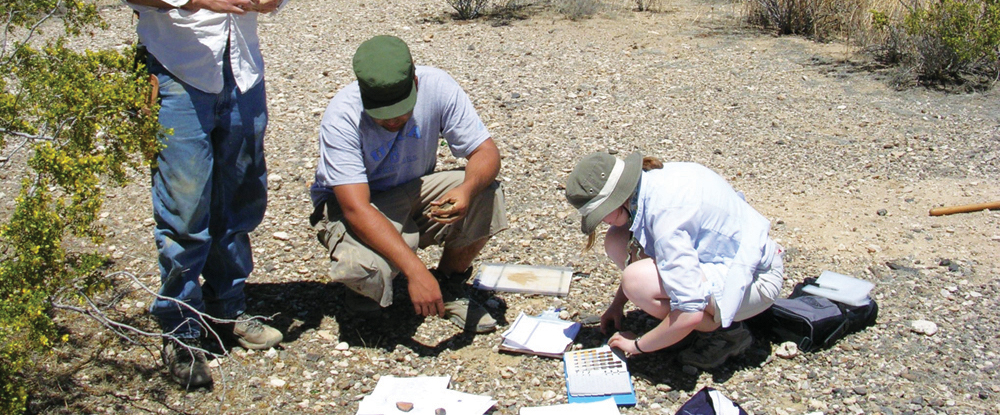
Much of my current work explores the evolving ocean and atmosphere and their cause-and-effect relationships with the origin and evolution of life. Biogeochemical processes that dominate modern and ancient carbonate platforms and oxygen-deficient marine basins are at the heart of this research. Primary methodologies track the signals of microbially mediated cycling of carbon, sulfur, and metals as expressed in their signature isotopic compositions preserved in ancient sedimentary rocks. With my students and colleagues, I am calibrating these proxy methods using modern sediments from the Black Sea, Cariaco Basin in Venezuela, Florida Bay, cold seeps in the Gulf of Mexico, and other settings. We have applied these proxies to deconstruct the paleoenvironmental contexts of Paleozoic black shale deposition and Precambrian biospheric evolution. Particularly exciting are patterns of early atmospheric oxygenation expressed in trace sulfate trapped within carbonate rocks (carbonate-associated sulfate) and in redox-sensitive metals within shales. Related work features marine oxygen isotope records preserved in phosphatic conodonts, iron paleoredox proxies, sulfur geomicrobiology, pathways of metal enrichment, and organic biomarker approaches.
Current Projects and
Research Opportunities
Ongoing projects, most with active NSF and NASA funding and student research opportunities, include (1) the molybdenum and iron isotope systematics of modern anoxic marine settings and the associated paleoenvironmental implications; (2) sulfate oxygen and sulfur isotope perspectives on Earth system evolution as refined through experimental microbiology and ground-truthing in the modern ocean; (3) collaborative geochemical exploration of recent drill cores from Western Australia that presage the Great Oxidation Event; (4) high-resolution, parallel carbon and sulfur isotope chemostratigraphy across organic carbon burial events in the Paleozoic; (5) the biogeochemistry of Cretaceous cold seeps in Colorado; (6) geochemical evidence for the causes and consequences of the Permo-Triassic extinction event as recorded globally; and (7) comparisons of Cretaceous oceanic anoxic events as preserved in deep and shallow marine sediments.
Some Recent Publications
Lyons, T.W., Luepke, J.J., Schreiber, M.E., and Zieg, G.A., 2000, Sulfur geochemical constraints on Mesoproterozoic restricted marine deposition: Lower Belt Supergroup, Northwestern U.S.: Geochimica et Cosmochimica Acta, v. 64, p. 427-437.
Werne, J.P., Sageman, B.B., Lyons, T.W., and Hollander, D.J., 2002, An integrated assessment of a "type euxinic" deposit: Evidence for multiple controls on black shale deposition in the Middle Devonian Oatka Creek Formation: American Journal of Science, v. 302, p. 110-143.
Lyons, T.W., Werne, J.P., Hollander, D.J., and Murray, R.W., 2003, Contrasting sulfur geochemistry and Fe/Al and Mo/Al ratios across the last oxic-to-anoxic transition in the Cariaco Basin, Venezuela: Chemical Geology, v. 195, p. 131-157.
Arnold, G.L., Anbar, A.D., Barling, J., and Lyons, T.W., 2004, Molybdenum isotope evidence for widespread anoxia in mid-Proterozoic oceans: Science, v. 304, p. 87-90.
Kah, L.C., Lyons, T.W., and Frank, T.D., 2004, Evidence for low marine sulphate and protracted oxygenation of the Proterozoic biosphere: Nature, v. 431, p. 834-838.
Lyons, T.W., 2004, Warm debate on early climate: Nature, v. 429, p. 359-360.
Lyons, T.W., Kah, L.C., and Gellatly, A.M., 2004, The Precambrian sulphur isotope record of evolving atmospheric oxygen, in Eriksson, P.G., et al.(eds.), The Precambrian Earth: Tempos and Events: Developments in Precambrian Geology, Elsevier, p. 421-440.
Lyons, T.W., Walter, L.M., Gellatly, A.M., Martini, A.M., and Blake, R.E., 2004, Sites of anomalous organic remineralization in the carbonate sediments of South Florida, U.S.A.: The sulfur cycle and carbonate-associated sulfate, in Amend, J., Edwards, K., and Lyons, T. (eds.), Sulfur Biogeochemistry-Past and Present: Geological Society of America Special Paper 379, p. 161-176.
Sageman, B.B., and Lyons, T.W., 2004, Geochemistry of fine-grained sediments and sedimentary rocks, in Mackenzie, F.T. (ed.), Sediments, Diagenesis, and Sedimentary Rocks: Treatise on Geochemistry v. 7, Elsevier, p. 115-158.
Gellatly, A.M., and Lyons, T.W., 2005, Trace sulfate in mid-Proterozoic carbonates and the sulfur isotope record of biospheric evolution: Geochimica et Cosmochimica Acta, v. 69, p. 3813-3829.
Lyons, T.W., and Kashgarian, M., 2005, Paradigm lost, paradigm found-The Black Sea-black shale connection as viewed from the anoxic basin margin: Oceanography, v. 18, p. 86-99.
Meyers, S.R., Sageman, B.B., and Lyons, T.W., 2005, The role of sulfate reduction in organic matter degradation and molybdenum accumulation: Theoretical framework and application to a Cretaceous organic matter burial event, Cenomanian-Turonian OAE II: Paleoceanography, v. 20, PA2002, doi:10.1029/2004PA001068.